
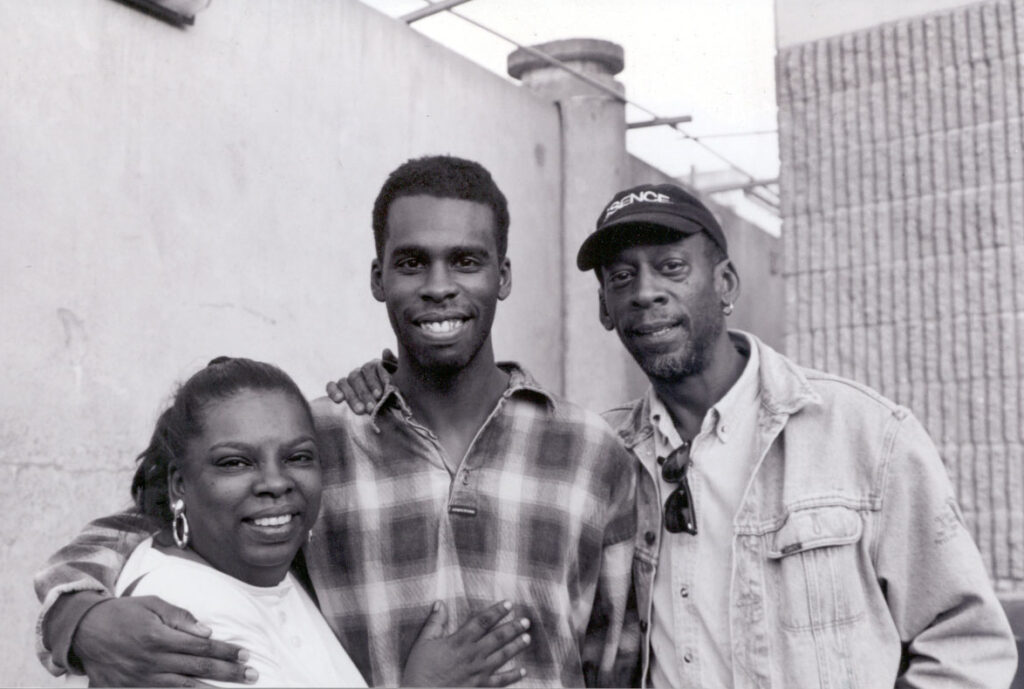
Martin Hubbard was shot to death in New Orleans on December 26, 1996. He’d been the passenger in a car driven by his cousin, Kevin. Kevin told police that he’d given Dwight Labran a ride and that Mr. Labran shot Mr. Hubbard as they were pulling up to a house at Mr. Labran’s direction. Kevin fled from the car and Mr. Labran gave chase, still firing a gun. Kevin was able to escape with a grazed head. Based only on Kevin’s narrative, Mr. Labran was arrested and charged with first degree murder. His trial attorney never investigated his alibi: he was on the other side of town, having dinner with family. A jury convicted Mr. Labran of first degree murder inJuly 1997. They could not unanimously agree on the death penalty and he was sentenced to life without parole.
Innocence & Justice Louisiana’s investigation uncovered much evidence that was suppressed by the state, illuminating the extent of the lies told by its key witness. Kevin started lying from the very start of the case, providing a false last name and trying to hide his own criminal activity. Kevin testified that he had never been arrested or convicted, was never in trouble with the law, and never served as an informant. No physical evidence tied Mr. Labran to this murder and no motive was ever established. Newly discovered evidence, instead, revealed that the state knew that Kevin was a dealer facing drug and illegal firearms charges. They hid this information from the defense. His record included arrests for violent crimes and drug convictions. Police knew that he used a false last name and were using him as an informant. Kevin was initially considered a suspect, not a victim, of this crime. He remained so until he implicated Mr. Labran. His testimony at Mr. Labran’s trial clearly differed from the evolving narrative he provided to police. Further, witness descriptions contradicted Kevin’s description of Mr. Labran. One witness described the fleeing gunman as limping, with an injured right leg that may have been shot. Mr. Labran had no such injuries and police testified untruthfully that there had been no other witnesses at or near the scene. Innocence & Justice Louisiana presented this new evidence, along with evidence showing that both trial counsel and the police investigated the case poorly, to the court in 2001. Mr. Labran’s conviction was overturned and he was exonerated in December 2001, having served almost 5 years for a crime he had nothing to do with.